
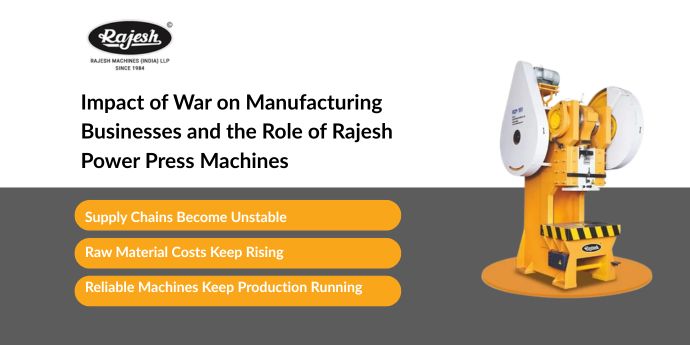
The Reality Check — War Doesn't Stay in One Place
There’s a tempting assumption that if your factory isn’t in a conflict zone, you’re safe. That’s not how it works anymore — and really, it hasn’t been true for a long time. The 2022 Russia-Ukraine war disrupted nickel and palladium supplies halfway around the world. The Red Sea attacks in 2023 added weeks to shipping routes connecting Asia and Europe. And the 2026 conflict in the Middle East — involving strikes on Gulf energy infrastructure, the effective disruption of the Strait of Hormuz, and cascading shutdowns of aluminium smelters in the UAE and Bahrain — is sending shockwaves through manufacturing sectors that most people would never associate with a war in Iran.
Here’s something worth understanding: according to Resilinc, a supply chain risk analytics firm, the current Middle East conflict alone could affect more than 11,000 suppliers and 100,000 products globally, with potential revenue exposure approaching US$460 billion. Recovery times for disrupted manufacturing and distribution operations could stretch to five months or more. That’s not a blip. That’s a restructuring event.
And if you’re running a fabrication shop, a sheet metal operation, an automotive component supplier, or any kind of industrial manufacturing unit in the UAE or the broader region — you’re not a bystander. You’re in the middle of it.
How War Shatters Supply Chains
Supply chains are built on predictability. They depend on shipping routes staying open, lead times staying stable, and suppliers staying operational. War destroys all three simultaneously — and the damage spreads in ways that aren’t always obvious at first.
Take the Suez Canal. When Houthi attacks in late 2023 forced shipping companies to reroute vessels around the Cape of Good Hope, it didn’t just inconvenience a few cargo operators. It added 10–14 days per voyage leg, tightened global shipping capacity, and sent freight rates surging. A single detour on a single route — and suddenly manufacturers in Southeast Asia are waiting weeks longer for components, and factories in Europe are paying more for raw materials.
The Strait of Hormuz is a far more significant chokepoint. Around 20 million barrels of oil and petroleum products passed through it daily in 2025. When that route is disrupted — even partially — the knock-on effects touch everything from energy prices to polymer availability to fertilizer costs. And the bypass alternatives (pipelines through Saudi Arabia and the UAE) have a combined capacity of only 3.5 to 5.5 million barrels per day. The math doesn’t work. Supply contracts get suspended. Force majeure declarations pile up. Manufacturers scramble for alternative sourcing that often doesn’t exist.
The UN Conference on Trade and Development (UNCTAD) reported a 35% increase in supply chain lead times during the Russia-Ukraine conflict period — significantly affecting automotive and electronics manufacturers that depend on just-in-time production models. Just-in-time, incidentally, is a philosophy built for peacetime. During conflict, it becomes a liability.
35%
Increase in global supply chain lead times during recent conflicts (UNCTAD)
$460B
Estimated global revenue exposure from the 2026 Middle East conflict (Resilinc)
5+ months
Projected recovery time for disrupted manufacturing operations
20%+
Average rise in production costs for industries impacted by war-era sanctions
Raw Material Shortage: The Hidden Crisis
Supply chain disruption is the headline. Raw material shortage is the thing that actually stops production.
The Gulf Cooperation Council countries — Saudi Arabia, UAE, Bahrain, Qatar, Kuwait, Oman — are not just oil exporters. They’re upstream suppliers for a surprising range of industrial inputs that manufacturing businesses depend on daily. Sulphur (UAE alone accounts for 23% of global exports), polyethylene, polypropylene, ammonia, and aluminium all originate heavily from this region. And when the region is in conflict, all of these get disrupted at once.
Aluminium is a particularly sharp example. Gulf states produce approximately 9% of global refined aluminium. In March 2026, the price jumped over 8% in a single month — and that was before Iranian strikes hit Emirates Global Aluminium directly, causing production shutdowns that could take months to reverse. For automotive component manufacturers, electrical panel fabricators, and HVAC sheet metal shops — all heavy users of aluminium — this translates directly into input cost inflation and availability crunches.
Polymers (used in packaging, automotive parts, construction materials, electrical applications) tightened sharply too — polypropylene up 16%, polyethylene up 15%, within days of the conflict escalating. Naphtha shortages forced Asian plastics producers to declare force majeure. And tungsten — critical for precision manufacturing dies, semiconductor production, and aerospace — surged over 50% in price in a single month after China restricted exports in parallel with the regional instability.
“It’s not the direct exposure that catches us out — it’s the secondary impacts. Like when the Evergreen container got stuck, causing a global chip shortage.” — Andy Hill, Sales & Marketing Manager EMEA, Philadelphia Scientific (speaking to The Manufacturer, March 2026)
That quote makes itself obvious as a pattern. Every major conflict of the past decade has produced secondary shocks that hit manufacturers far from the actual fighting. The factories that survive are the ones who saw the secondary impacts coming — and reduced their vulnerability to them before the crisis hit.
Energy Costs, Freight Spikes, and the Margin Squeeze
Here’s where things get uncomfortable for manufacturers who are already running on thin margins. War — especially in oil-producing regions — is effectively a forced tax on every energy-intensive production operation in the world.
Brent crude oil rose roughly 25% in a short period after the February 2026 escalation in the Middle East, reaching $91 per barrel. European natural gas futures surged 56% in the same window. Jet fuel jumped 58%. These aren’t abstract finance numbers — they’re input costs. Running a hydraulic press machine, a laser cutting machine, a shearing line, a bending operation — all of it requires electricity, and often fuel. When energy prices spike, production costs spike with them. There’s no way around it.
Freight is the other hammer. A cargo vessel rerouted from the Suez to the Cape of Good Hope doesn’t just take longer — it ties up capacity. The global fleet becomes less efficient. Fewer containers are available where they’re needed. Maritime insurance premiums rise as war-risk coverage is withdrawn from Gulf routes. All of this feeds into landed cost for imported raw materials and components.
For a manufacturer in the UAE importing steel coil, aluminium sheet, or tooling components — the cost per shipment can jump significantly in a matter of weeks, with no corresponding increase in what customers are willing to pay. That margin squeeze is real, and it hits small and mid-sized manufacturers hardest, because they have less buffer and less pricing power than large conglomerates.
What this means in practice: A manufacturing business that was operating on, say, a 12% margin pre-conflict can find that margin cut in half — not because their product got worse, but because energy and freight costs went up, raw material lead times extended, and they had to either absorb costs or lose customers. This is why war’s impact on manufacturing is not theoretical. It shows up in the monthly P&L.
Why Dependency Is the Real Enemy
Let’s call this what it actually is: the biggest vulnerability in most manufacturing businesses isn’t the conflict itself. It’s dependency — on a single supplier, a single shipping route, a single energy source, a single piece of machinery that they don’t own but lease or outsource.
Most discussions about war and supply chains focus on the disruption. But the disruption is the symptom. The underlying disease is over-dependency. A factory that sources a critical component from one supplier in one country, shipped through one route, is not a resilient factory. It’s a factory that’s one geopolitical event away from a production halt.
This is not a new observation — but conflicts have a way of making it viscerally real in ways that peacetime planning meetings rarely do. The Russia-Ukraine war taught the automotive industry (at great cost) about single-source palladium for catalytic converters and single-source neon gas for semiconductor lithography. The Red Sea attacks taught shipping-dependent manufacturers about route dependency. The 2026 Middle East conflict is teaching manufacturers about energy and raw material dependency all over again.
The uncomfortable truth is that many businesses knew these dependencies existed. They just calculated that diversification was expensive and the risk was low. When the risk materialises — and history keeps proving it does — that calculation looks like an expensive lesson.
Industries Hit Hardestand Why
Automotive Components | Aluminium, steel, palladium, semiconductors | Production slowdowns, component shortages, cost inflation per unit |
Sheet Metal Fabrication | Steel and aluminium raw material pricing | Input cost spikes, longer lead times, margin compression |
Electrical Panel Manufacturing | Copper, specialty steel, resins, polymers | Material scarcity, production delays, customer order backlog |
HVAC & Building Materials | Galvanised steel, aluminium, polypropylene | Price volatility, project delivery delays for downstream clients |
Chemicals & Plastics | Naphtha, petrochemical feedstocks from Gulf | Force majeure declarations, production suspensions |
General Engineering Workshops | Energy costs, tooling, imported consumables | Operating cost increases, machine downtime becomes more expensive |
Notice something about that table. Almost every industry on it involves sheet metal processing, pressing, forming, or cutting at some stage. The machines that do this work — press brakes, shearing machines, power press machines — sit at the heart of manufacturing operations across all of them. When those machines are reliable and owned outright, they’re one fewer dependency. When they’re leased, outsourced, or prone to downtime, they become another vulnerability.
Shifting from Disruption to Control
Here’s where the conversation needs to change. Most of what gets written about war and manufacturing stops at the problem statement. Supply chains are disrupted. Costs are rising. Uncertainty is high. That’s accurate, and it’s useful context — but it’s not actionable.
The manufacturers who have come through the last four years of geopolitical disruption (COVID, Russia-Ukraine, Red Sea, and now the 2026 Middle East conflict) with their operations intact have one thing in common: they focused on control. Not control of external events — that’s impossible — but control over the variables inside their factory fence.
What can you actually control? Your machinery capacity and reliability. Your in-house production capabilities versus your outsourcing exposure. Your energy efficiency, which determines how hard rising power costs hit you. Your inventory of critical raw materials for key jobs. And your ability to keep production moving even when external conditions are unstable.
War doesn’t stop production. Dependency does. That reframe matters, because it shifts the question from “how do we survive this disruption?” to “what can we do right now to reduce the things we depend on that we can’t control?”
The Role of Reliable Machinery in Crisis-Proofing Production
This might seem like an obvious point, but it’s worth saying plainly: when external supply chains are unreliable, your internal production capability becomes more valuable, not less.
A factory that can cut, form, bend, and press metal in-house — rather than outsourcing those operations — has more control over its output schedule. It’s not waiting on a subcontractor whose own supplier just declared force majeure. It’s not dependent on a processing service that suddenly raised its rates because their energy costs tripled. It has the capability inside the building, running on machines it owns.
This is why capital investment in reliable machinery during stable periods pays dividends during unstable ones. It’s the manufacturing equivalent of keeping a generator. When the grid works fine, you wonder why you bothered. When the power goes out, you’re the only one still operating.
The specific attributes of machinery that matter most during crises are:
The Role of Reliable Machinery in Crisis-Proofing Production
This might seem like an obvious point, but it’s worth saying plainly: when external supply chains are unreliable, your internal production capability becomes more valuable, not less.
A factory that can cut, form, bend, and press metal in-house — rather than outsourcing those operations — has more control over its output schedule. It’s not waiting on a subcontractor whose own supplier just declared force majeure. It’s not dependent on a processing service that suddenly raised its rates because their energy costs tripled. It has the capability inside the building, running on machines it owns.
This is why capital investment in reliable machinery during stable periods pays dividends during unstable ones. It’s the manufacturing equivalent of keeping a generator. When the grid works fine, you wonder why you bothered. When the power goes out, you’re the only one still operating.
The specific attributes of machinery that matter most during crises are:
Reliability and Uptime
A machine that breaks down frequently is a problem in normal times. During a crisis — when repair parts may be harder to source and technician visits more expensive — it’s a much bigger problem. Machines with proven reliability, sturdy construction, and long service life aren’t a premium. They’re risk reduction.
Low Maintenance Requirements
Hydraulic consumables, replacement parts, tooling — all of these become more expensive and harder to source when global logistics are strained. A machine designed for low maintenance doesn’t just save money in normal times; it reduces exposure to supply chain disruption for spare parts during crises.
Energy Efficiency
When industrial electricity prices are spiking — and in conflict periods, they spike fast — an energy-efficient machine directly reduces how hard that spike hits your operating cost. This is not a minor point. For operations running multiple machines across long shifts, the difference between an efficient and inefficient machine in the press or shearing category can amount to significant savings per month at elevated energy prices.
In-House Capability vs. Outsourced Processing
Every operation you bring in-house is one fewer external dependency. Shops that had invested in their own hydraulic shearing capacity, their own press brake bending, and their own power press forming before 2022 were significantly better positioned than those relying on external processing services when subcontractor lead times ballooned.
How Rajesh Power Press Machines Fit Into This Picture
Rajesh Machines has been manufacturing and supplying sheet metal machinery since 1984 — more than four decades of building machines for factories that need to keep running regardless of what’s happening in the world around them. That’s not a marketing claim; it’s the operational reality of serving industrial clients across India and the UAE over multiple cycles of economic disruption, including recessions, pandemics, and now active regional conflicts.
Operating from Sharjah — one of the UAE’s main industrial hubs — Rajesh Machines Middle East (FZC) supplies a range of machines specifically suited to the kinds of production operations that need to remain stable during crises. Here’s what that looks like in practice:
Power Press Machines — Volume Production Without Outsourcing
C-Frame and H-Frame power press machines handle stamping, punching, blanking, and forming at production volumes that make in-house processing economically viable even at smaller scales. Shops that invested in their own power press capacity have been able to maintain output schedules when subcontractors became unavailable or unaffordable. These machines are built for durability — the kind of durable that means you’re still running them in year fifteen when an external crisis hits.
Hydraulic Press Machines — Versatility Under Pressure
The range of hydraulic press machines — C-Frame, H-Frame, Four Column, Workshop variants — gives fabricators the in-house forming capability to handle jobs without routing them externally. During disruptions, the ability to keep a job in-house and deliver on time to a customer is a competitive advantage that compounds over time.
Shearing Machines — Consistent Sheet Metal Cutting Regardless of External Conditions
The Hydraulic Guillotine Shearing Machine and NC Swing Beam Shearing Machine provide accurate, repeatable sheet metal cutting capability without relying on outside processing. When input material prices are volatile, the last thing you want is also an unreliable cutting step that adds waste or rework. Consistent blade gap, hydraulic hold-down, and precise back gauge control reduce material waste — which matters more when every kg of steel or aluminium costs more than it did last quarter.
Press Brake Machines — Precision Bending In-House
The press brake range — from hydraulic rear cylinder to NC and CNC variants — allows fabricators to complete complex bending operations without outsourcing. During supply chain disruptions, every step you control internally is one fewer point of failure. A CNC press brake that bends accurately first time, every time, reduces material waste and rework in an environment where input costs are elevated.
Laser Cutting Machines — Precision on Complex Parts
The CNC Fiber Laser Smart Series and Genius Series give fabricators the ability to handle intricate cutting work in-house rather than routing to specialist service centres — which in turn have their own supply chain and energy cost pressures during crisis periods. When external services become expensive or unreliable, in-house laser capability is a significant operational asset.
Practical Steps for Manufacturers to Build Resilience
This isn’t just about buying machines. Here are the broader actions that manufacturers can take — including machinery investment — to reduce their vulnerability to the next disruption (because there will be a next one):
1. Audit Your Dependencies Right Now
Map every critical input — raw materials, components, processing services, logistics routes, energy sources — and identify where you have a single point of failure. Not to panic, but to plan. The companies that navigated the 2022–2026 disruptions best were the ones who had done this exercise before the crisis, not during it.
2. Build Strategic Inventory Buffers for Critical Materials
The just-in-time model is a peacetime luxury. During active supply chain disruption, holding reasonable buffer stock of critical raw materials (steel coil, aluminium sheet, key consumables) is not inefficiency — it’s insurance. Calculate the cost of that buffer against the cost of a production halt, and the math usually becomes obvious.
3. Diversify Suppliers Across Geographies
One region, one supplier, one route — that’s a single point of failure. Qualifying alternative suppliers across different geographies takes time and effort, but it’s the difference between a delay and a shutdown when something goes wrong. This applies to raw materials, components, tooling, and services.
4. Invest in In-House Production Capability
Every process you bring in-house reduces dependency on external providers who have their own vulnerabilities. For sheet metal fabricators, this means owning — and maintaining well — the cutting, bending, forming, and pressing capacity you need for your core product range. An operation running on reliable owned machinery is fundamentally more stable than one that outsources critical steps.
5. Prioritise Energy Efficiency
When energy prices spike (and they spike fast during conflicts in oil-producing regions), energy-efficient equipment is directly cost-protective. If you’re running machines that are 15 years old and consuming significantly more power than modern equivalents, the upgrade case becomes compelling when electricity prices double. Factor energy efficiency into every machinery investment decision.
6. Reduce Machine Downtime Risk
A machine that breaks down during a crisis is doubly damaging — because repair parts and service visits may themselves be harder to arrange when logistics are strained. Scheduled preventive maintenance, keeping critical spare parts in stock, and investing in machines with proven reliability records all reduce this risk.
7. Review Contracts and Force Majeure Exposure
Go through your key supply and customer contracts. Understand where you have force majeure exposure — both as a recipient (from suppliers who might invoke it) and as a potential invoker yourself. Know what your obligations are and what flexibility exists before you need it.
Frequently Asked Questions
How does war affect manufacturing businesses that are not in the conflict zone?
Through several interconnected channels. Energy prices rise globally when conflict disrupts major oil and gas producing regions. Shipping routes get longer or more dangerous, raising freight costs and extending lead times. Raw material availability tightens when major producing countries or regions are involved. Financial market volatility raises financing costs. And supplier networks get disrupted as force majeure declarations cascade through supply chains. None of these effects require you to be anywhere near the actual fighting.
Which industries are most affected by war and global conflict?
Industries with heavy dependence on energy (chemicals, metals processing, automotive), industries reliant on long global supply chains (electronics, automotive, pharmaceuticals), and industries dependent on Gulf/Middle East exports for raw materials (petrochemicals, aluminium, fertilizers). Sheet metal fabrication and general manufacturing are affected across multiple of these vectors simultaneously.
What is the impact of war on supply chains specifically?
War creates two simultaneous constraints on supply chains: quantity constraints (materials and components become unavailable or scarce) and price constraints (costs spike for available materials and logistics). Both happen at once, creating what researchers call a “dual impact” — you’re paying more for less, with longer lead times and higher uncertainty about future availability.
How can manufacturing businesses reduce the impact of global conflict on their operations?
The most effective strategies are supplier diversification (multiple sources across different geographies), strategic inventory buffers for critical raw materials, in-house production capability that reduces dependency on external processing, energy efficiency investment to buffer against energy price spikes, and preventive maintenance protocols that reduce machine downtime risk during periods when repair services may themselves be disrupted.
Why is reliable machinery important during geopolitical uncertainty?
Because external uncertainty makes internal reliability more valuable. When you can’t control what’s happening in shipping routes, raw material markets, or energy prices, the things inside your factory that you can control become more strategically important. A reliable machine that runs consistently, requires little maintenance, and doesn’t break down unexpectedly is not just an operational asset — it’s a risk management tool during periods of external disruption.
How does the Middle East conflict in 2026 affect UAE manufacturers specifically?
UAE manufacturers face several direct pressures: aluminium smelter disruptions in the region affecting local material availability, energy cost increases tied to Gulf oil and gas market disruption, logistics complications through Gulf shipping routes, and broader economic uncertainty affecting customer order pipelines. The UAE’s position as both a manufacturing hub and a Gulf state means it has both producer-side and consumer-side exposure to the disruption.
Is investing in new machinery a good idea during a war or economic crisis?
This depends on the type of investment. Capital investment in machinery that reduces operational dependency — bringing in-house processes that are currently outsourced, replacing old energy-intensive machines with efficient modern ones, or adding capacity that reduces subcontractor reliance — typically becomes more valuable during crises, not less. The manufacturers who invested in their in-house capabilities before 2022 were significantly better positioned during the supply chain disruptions that followed. That pattern repeats across every major disruption cycle.