
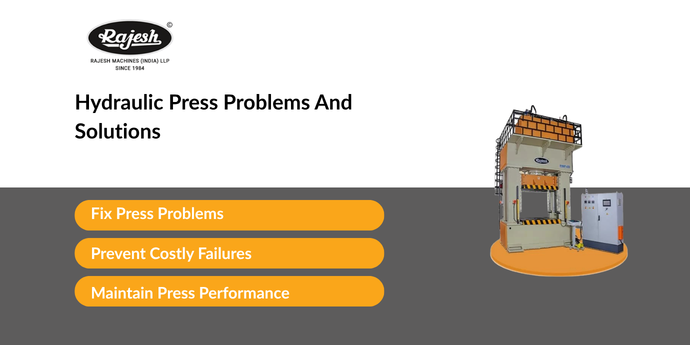
It usually starts small. A stroke that feels a touch slower than yesterday. A faint hiss near the cylinder gland that you tell yourself you’ll look at “after this batch.” Then one morning the ram won’t build pressure at all, and a job that should’ve shipped by noon is sitting half-formed on the table while the whole line waits behind it.
If that sounds familiar, you’re not doing anything wrong — hydraulic presses are simple in principle and genuinely tough machines, but they’re also full of seals, valves, and fluid that wear down with hours on the clock. The good news is that the vast majority of press problems trace back to a short list of causes, and most of them give you warning signs well before they cause real downtime. This guide walks through what usually goes wrong, why, and how to tell a five-minute fix from a “stop and call someone” situation — with a few notes specific to running a press in Gulf heat and dust, which most troubleshooting guides don’t mention at all.
A Quick Refresher: How a Hydraulic Press Actually Works
A hydraulic press runs on Pascal’s principle — pressure applied to a confined fluid transmits equally in all directions. An electric motor drives a pump, the pump pushes hydraulic oil into a cylinder, and that oil pushes a piston (the ram) down onto the workpiece with far more force than the motor alone could ever generate. Valves control how much pressure builds, how fast the ram advances, and when it returns.
That’s also, conveniently, a map of everything that can go wrong: the pump can wear, the oil can degrade or contaminate, the valves can stick or leak, and the seals around the piston can age out. Once you know which of these four systems is misbehaving, diagnosis gets a lot faster.
Common Hydraulic Press Problems At a Glance
| Symptom | Most Likely Cause | Quick Fix | Call a Technician If |
|---|---|---|---|
| Press won't build pressure / pressure stuck low | Worn pump, stuck relief valve, degraded seals | Check relief valve for debris, verify oil level and grade | Pressure stays low after cleaning/refilling |
| Ram moves slowly or inconsistently | Contaminated oil, clogged filter, air in the system | Replace filter, top up with correct-viscosity oil | Speed doesn't improve after fluid service |
| Visible oil leak at cylinder or fittings | Worn seals, loose fittings, aged hoses | Tighten fittings, inspect hose condition | Leak is from the cylinder gland or piston seal itself |
| Loud whining or growling noise | Aeration or pump cavitation from air ingress | Check suction hose and strainer for leaks/clogs | Noise persists after fixing suction-side issues |
| Machine runs hot / oil temperature climbs | Operating above needed pressure, low fluid, poor ventilation | Check fluid level, reduce excess system pressure | Temperature exceeds 65°C (150°F) regularly |
| Uneven pressing / inconsistent part quality | Misalignment between table and ram, worn guide surfaces | Re-check alignment per manual | Misalignment recurs after adjustment |
| Press won't start or control panel is unresponsive | Electrical fault, tripped protection, wiring issue | Check panel indicators, reset per manual | Any doubt at all — this is not a DIY area |
The Big Four, In Detail
1. Pressure Loss or Failure to Build Pressure
This is the complaint that brings most people to a guide like this. The system either won’t reach set pressure or the gauge fluctuates unpredictably. In most cases it’s one of three things: internal leakage past worn cylinder seals, a relief valve that’s stuck open or has debris on its seat, or a pump that’s simply worn past its efficient range after years of duty cycles.
Start with the cheap checks — oil level, oil condition, and a visual inspection of the relief valve for contamination. If pressure is still off after that, the pump’s volumetric efficiency needs to be measured properly; a reading meaningfully below what the machine was rated for usually means a rebuild or replacement is due.
2. Slow or Inconsistent Ram Movement
If the actuator feels sluggish or the stroke isn’t repeatable, the oil is almost always the first suspect. Contaminated or wrong-viscosity fluid causes poor lubrication and pump cavitation, both of which show up as inconsistent speed long before they cause a full failure. Clogged filters do the same thing by starving flow. This is also the most preventable failure mode on the list — most manufacturers recommend an oil change every 2,000–4,000 operating hours, though a fluid analysis is a better guide than the calendar alone.
3. Oil Leaks
A leak is rarely subtle once you know where to look — fittings, hose connections, and the cylinder gland are the usual suspects. Fittings and hoses are a straightforward fix. A leak from the piston seal itself is a different story: it means the seal has worn or the cylinder bore has scoring, and it needs proper cylinder service rather than a wrench and some thread tape.
4. Unusual Noise
A whining or growling sound almost always means air where it shouldn’t be — either aeration (air entering through the suction line) or cavitation (the pump starved of oil). Check the suction hose for leaks and make sure the strainer isn’t clogged. Left alone, both conditions accelerate wear on the pump and valves considerably faster than normal operation would.
Why UAE Workshop Conditions Make This Worse
Most troubleshooting guides are written without accounting for climate, but if you’re running a press in Sharjah, Dubai, or anywhere in the Gulf, ambient heat and airborne dust genuinely change the maintenance math:
- Heat accelerates oil breakdown. Hydraulic oil that might last 4,000 hours in a temperate climate can oxidize and lose viscosity faster in a workshop where ambient temperatures regularly sit above 40°C in summer — which pushes your press’s internal operating temperature higher too. Shortening your fluid analysis interval in the hot months is cheap insurance.
- Dust accelerates seal and filter wear. Fine airborne dust is a fact of life on a lot of GCC industrial sites, and it works its way into reservoirs and past worn seals more easily than in cleaner environments. Keeping reservoirs sealed and filters on schedule matters more here than the standard maintenance interval assumes.
- Humidity swings near the coast can introduce condensation into oil that sits for long periods, which is worth a look if a press has been idle for a while before a busy season starts.
None of this means presses need babying — it means the standard preventive maintenance schedule deserves a slightly tighter interval in this region, not a looser one.
Preventive Maintenance That Actually Prevents Problems
Most of the failures above give you time to catch them if you’re looking. A simple, realistic routine:
- Daily: visual check for leaks, listen for new noises, confirm oil level
- Weekly: inspect hoses, fittings, and seals for early wear
- Every 3–6 months: clean or replace filters
- Every 2,000–4,000 hours (or sooner in high-heat conditions): fluid analysis and oil change
- Ongoing: log every service and inspection — patterns in that log catch slow-developing problems (like a piston that keeps needing a “top-up fix” instead of an actual repair) that a single inspection won’t.
When It's Time to Stop Repairing and Start Comparing
Sometimes the honest answer isn’t another repair. If a press needs the same fix every few months, if pressure loss keeps returning after seal replacement, or if the machine is old enough that parts availability has become its own project, the maintenance bill starts competing with the cost of a press that’s simply better built for your duty cycle.
This is where build quality actually shows up in day-to-day reliability rather than just a spec sheet. Rajesh Machines’ hydraulic presses use forged, bore-honed cylinder bodies and hard chrome-plated (0.200 micron) piston rods specifically to extend seal life and reduce the internal leakage that causes pressure loss. The hydraulic system itself uses compact valve blocks to cut down on the pipe joints and fittings that are the most common leak points, with pressure relief valves built in to protect the system from overload — the same failure points that show up again and again in this guide, engineered out at the source. If you’re evaluating whether to keep repairing or replace, our C-Frame Hydraulic Press, H-Frame Hydraulic Press, and Four Pillar Hydraulic Press pages break down which frame type and tonnage fits different forming, drawing, and blanking jobs.
Conclusion
Hydraulic press problems almost always trace back to the same four things — pressure, fluid, seals, and air — and nearly all of them announce themselves with a symptom well before they cause a shutdown. A tight preventive maintenance routine, adjusted a little for Gulf heat and dust, catches most of it early. And when a press is past the point where maintenance makes financial sense, that’s a decision worth making deliberately rather than one more emergency repair at a time.
FAQ
Why does my hydraulic press lose pressure overnight even with no leaks visible?
Internal leakage past worn piston seals doesn’t always show up as an external leak — it can bleed pressure from inside the cylinder. A pump efficiency check is usually the next step if a visual inspection turns up nothing.
How often should I change hydraulic oil on a press running in UAE conditions?
Most manufacturers recommend 2,000–4,000 operating hours as a baseline, but higher ambient heat accelerates oil breakdown — a fluid analysis every few months during peak summer is a more reliable guide than the interval alone.
Is a whining noise from my press dangerous?
Not immediately dangerous, but it’s a clear sign of aeration or cavitation, both of which accelerate pump and valve wear if left unaddressed. It’s worth checking the suction line and strainer as soon as you notice it.
Can I fix a hydraulic press leak myself?
Leaks at fittings and hoses are usually straightforward to fix. A leak from the cylinder gland or piston seal itself means the seal or cylinder needs proper service — not something to improvise on a press generating tens of tons of force.
How do I know if I should repair my press or replace it?
If the same fault keeps recurring after repair, if parts are getting hard to source, or if repair costs are approaching a meaningful fraction of a new machine’s price, it’s worth comparing replacement options rather than continuing to patch the same failure.
What makes some hydraulic presses less prone to these problems than others?
Build quality in the cylinder and hydraulic system is the biggest factor — forged, honed cylinder bodies, hard chrome-plated piston rods, and compact hydraulic blocks with fewer fittings all directly reduce the leakage and pressure-loss issues covered in this guide.