
Introduction
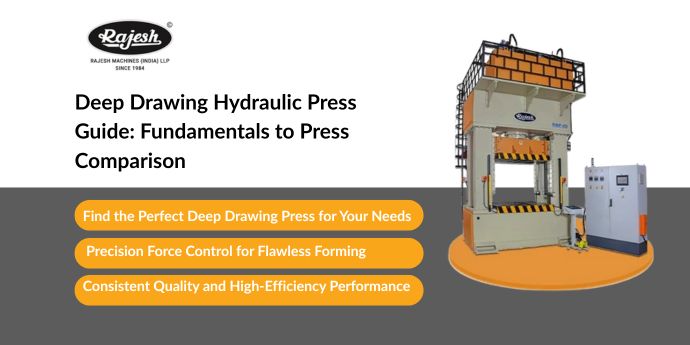
Deep drawing is considered to be an extremely flexible metal forming method used in modern manufacturing. This method transforms flat sheets of metal into three-dimensional hollow pieces using controlled force applied through the punch and die system. A deep drawing hydraulic press powers the entire process and provides the exact force required to form metal with no flaws. The method creates components in which the depth is greater than the diameter. This makes it suitable for making kitchen sinks, fuel tanks, beverages cans, and body panels for cars. From tiny precision parts to large industrial containers this technique of forming can provide the quality and consistency that the manufacturers require.
Why Hydraulic Presses Matter in Deep Drawing
The significance of hydraulic technology in deep drawing cannot be overstated. Unlike other forming methods, hydraulic press machines provide manufacturers with precise control over every aspect of the forming process. This control translates directly into better part quality, reduced material waste, and improved production efficiency.
Hydraulic presses can handle the rigorous demands of deep drawing processes where the materials have to stretch and flow in a uniform manner without cracking or wrinkles. The ability to change the speed, pressure and stroke lengths in real-time allows users to adjust parameters for various parts and materials. This versatility makes hydraulic systems essential for companies working with different products and materials.
Why Metal Forming Industries Rely on Hydraulic Technology
The manufacturing industry demands machines that can deliver power and high-quality. Hydraulic press machines meet the requirements of these industries by providing unmatched control over the force applied along with stroke rate. This degree of control is essential when working with substances which require specific parameters for forming to prevent defects.
Deep drawing press machines handle various metals like aluminum, stainless steel, copper, and other special alloys. This allows manufacturers to provide multiple industries with one production line. The automotive industry uses the presses to make body panels and the aerospace industry relies on them for structural parts.
Modern hydraulic systems have controls that are programmable, allowing operators to adjust every part of the process of forming. This reduces the rate of scrap and extends the life of tools and ensures the same quality throughout production runs. The financial effect is reduced operational expenses and increased profits margins.
How Hydraulic Presses Execute Deep Drawing Operations
The forming cycle starts when a metal blank is positioned over the die opening. A blank holder uses controlled pressure to hold the material and allow it to flow easily inside the die cavity. As the hydraulic ram lowers the punch pulls the blank down and forces it to be shaped to fit the die.
What makes a deep draw hydraulic press machine so effective is the ability to keep an even pressure throughout the whole creating stroke. The material moves slowly to reduce internal stresses which can cause tears or cracks. The controlled deformation results in components with a uniform wall thickness and surface defects that are minimal.
Complex shapes often require multiple drawing stages. The first operation creates a shallow cup, while subsequent stages progressively increase the depth. Each redrawing operation uses carefully calculated force and die geometry to achieve the final dimensions. A deep drawing hydraulic press handles these multi-stage operations with precision, producing components that would be impossible to form in a single operation.
Understanding Hydraulic Press Technology
How Hydraulic Systems Generate Forming Force
Pascal’s principle forms the foundation of hydraulic press operation. When pressure is applied to an enclosed fluid, that pressure transmits equally throughout the fluid and to every surface it contacts. This simple principle enables hydraulic presses to multiply force dramatically.
The system starts by pumping hydraulic oil from the reservoir into a cylinder. As the pressure of the fluid increases as it increases, it pushes against a piston that is connected with the press ram. The ram transfers the force onto the punch that shapes the die’s metal. The entire sequence operates smoothly and predictably.
What sets deep drawing hydraulic press systems apart is their ability to deliver full tonnage at any point in the stroke. Unlike momentum-based systems that generate peak force only at specific points, hydraulic presses maintain constant pressure from start to finish. This characteristic makes them superior for deep drawing where consistent force matters.
Essential Parts of a Hydraulic Press Machine
Every hydraulic press machine contains several integrated components that work together:
- Press Frame: The backbone of the machine, built to withstand millions of pounds of force without deflection. Frame design varies based on application requirements.
- Hydraulic Power System: Includes the pump, reservoir, valves, and fluid that create and control pressure. This system determines press speed and force characteristics.
- Ram and Platen: The moving component that transfers hydraulic force to the forming tools. Ram design affects stroke length and speed capabilities.
- Tooling Components: The punch creates the desired shape while the die provides the forming cavity. Blank holders control material flow during the operation.
- Control Interface: Modern systems feature digital controls that allow operators to program and monitor all process parameters. Advanced models include touchscreens and data logging capabilities.
- Safety Systems: Multiple safeguards protect operators including light curtains, emergency stops, and pressure relief valves.
A proper maintenance program for these components will ensure reliability and consistency in part quality throughout the press’s service life.
Key Benefits of Hydraulic Presses for Deep Drawing
Manufacturers choose deep drawing press machines for several compelling reasons:
- Superior Force Control: Operators are able to establish precise pressure levels and then maintain them throughout the process of forming. This helps reduce trial-and-error in the process and helps reduce waste materials. The deep drawing hydraulic press produces consistent results over all production runs.
- Consistent Tonnage Delivery: Hydraulic systems provide full rated capacity throughout the entire stroke length. This enables deeper draws and more complex geometries than alternative technologies.
- Material Flexibility: A deep draw hydraulic press machine works equally well with soft metals like aluminum and harder materials like stainless steel. Quick parameter adjustments accommodate different material properties.
- Efficient Setup Changes: The process of switching between production runs takes less time since hydraulic systems are electronically adjusted rather than via mechanical adjustments.
- Extended Tool Life: Controlled force application decreases the stress on dies and punches. The tools last longer, and need less frequent maintenance.
- Operator Safety: Protection features built into the structure and fluid operation provide an environment that is safer to work in with respect to impact-based forming methods.
- Energy Conservation: Hydraulic pumps are only running when they are in active formation and reduce the power usage during idle time.
Hydraulic vs Mechanical Press Systems: Making the Right Choice
Selecting appropriate forming equipment requires understanding how different press types perform:
- Force Characteristics: Hydraulic systems deliver constant tonnage anywhere in the stroke, while mechanical presses generate maximum force only near the bottom. This difference significantly affects forming capability and part quality.
- Operational Speed: Mechanical presses cycle faster, making them efficient for high-volume shallow forming. Hydraulic presses prioritize control over speed, which benefits complex deep drawing operations.
- Process Adjustability: Hydraulic press machines offer extensive parameter control including stroke length, pressure, and dwell time. Mechanical systems have limited adjustment capabilities.
- Maintenance Requirements: Mechanical presses need regular attention to drive components like gears and clutches. Hydraulic systems require fluid management and seal inspection but have fewer wear points.
- Initial Investment: Mechanical presses may initially cost less, but their total ownership costs often favor hydraulic systems due to reduced operating expenses and tooling expenses.
- Work Environment: Hydraulic presses operate more quietly and with reduced vibration levels, improving workplace conditions.
For additional insights into press technology comparisons, explore our detailed Hydraulic vs Pneumatic Press Machine analysis.
Get Premium Hydraulic Presses from Rajesh Machines Middle East
Rajesh Machines Middle East delivers industrial-grade hydraulic solutions tailored to your manufacturing needs. Our product lineup includes four specialized press configurations:
- C-Frame Hydraulic Press is an open-front design that provides easy workpiece access and tool visibility.
- H-Frame Hydraulic Press is a robust construction that handles demanding heavy-duty applications.
- Four Pillar Hydraulic Press is a four-column stability that ensures precision for critical deep drawing work.
- Hydraulic Workshop Press is a compact solution for smaller operations and prototyping.
Each machine features quality components, intuitive controls, and reliable performance. We support your production goals with technical expertise and responsive service.
Final Thoughts
The deep drawing hydraulic press is a critical technology that is essential to modern metal forming. Its unique capability to deliver constant, controlled force throughout the entire stroke allows manufacturers to create complex components of the highest quality. A deep drawing press machine creates the metal components that are used in a variety of applications in all industries around the world that range from consumer products up to equipment for industrial use. Mastering the basics in hydraulic press machine operation, understanding their advantages and selecting the right configurations positions manufacturers to succeed in the competitive marketplace. When precision, flexibility and reliability are crucial the deep draw hydraulic press machines provide the efficiency you require for your business.
Frequently Asked Questions
What makes hydraulic presses suitable for deep drawing?
Hydraulic presses offer an even pressurization and control throughout the process of forming. This makes the metal form itself in a smooth manner without tearing or wrinkling.
Can hydraulic presses work with different metals?
Hydraulic presses create a variety of materials, including aluminum, steel, copper and alloys. The adjustable pressure they have makes them suitable for hard and soft metals.
Do hydraulic presses require constant speed?
The speed and pressure can be altered during different phases of the process of deep drawing. This allows for more control, accuracy and also better quality parts.
Are hydraulic presses good for large-size components?
Yes, their longer stroke and smooth pressing action make them ideal for deep or large components. They also maintain stable force distribution across bigger surfaces.
How long does a hydraulic press last?
Through regular maintenance of seals, hydraulic oil, and system components the hydraulic press will last for a long time without issue. Careful maintenance can greatly extend the life span and efficiency.