
Introduction
Good manufacturing depends on having the right tools. The C-type power press machine is one of the most valuable pieces of equipment in modern metalworking, turning flat metal into precise components that industries depend on. From car parts to electronic casings, this machine shapes the products we use constantly.
Knowing how a power press machine works and the different types, applications of it is essential for manufacturers, as they can then make informed choices in terms of their production requirements. This all-inclusive guide will cover some of the most pertinent points about C-type power press machines and is supported by industry knowledge gathered from Rajesh Machines, one of the highly regarded power press machine manufacturers.
What is a C-Type Power Press Machine?
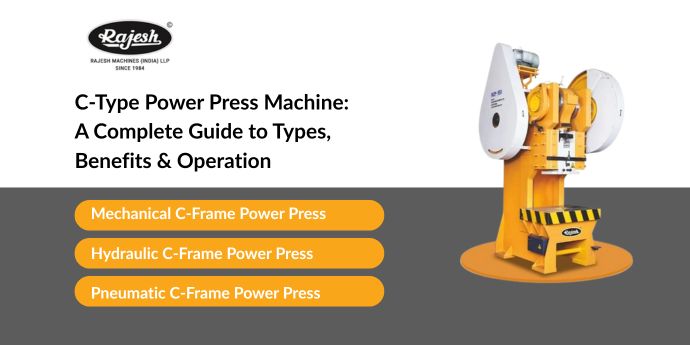
The name of a C-type power press machine is derived from the appearance of its C-shaped frame. This unique system ensures stability and gives the operator access to the working area from three sides. The machine is widely known as a highly efficient metal molding tool that forms and molds metal sheets with great precision by means of a punch/die system to carry out punching, cutting, bending, or forming operations thereon.
The C-shaped frame leaves the front open, which makes it faster to swap dies, handle materials, and see what you’re doing. This setup works especially well in high-volume production where you need both speed and precision.
How Does a Power Press Machine Work?
The operation of a power press machine follows a straightforward yet powerful process:
The Working Mechanism
The machine clamps a custom-made die onto the press bed—that’s the bottom part that doesn’t move. Up top, there’s a punch tool attached to the ram, which is what actually moves and applies the force. Hit the start, and the ram pushes down with controlled pressure, forcing the punch through the metal sheet resting on the die below.
This pressure pushes down and shapes the metal to match the die’s shape, making parts that come out the same size every time. Modern machines can do this hundreds or even thousands of times an hour, giving you the kind of output that busy manufacturing operations need.
The power source varies based on the machine type, with mechanical systems using flywheel energy, hydraulic systems employing fluid pressure, and pneumatic versions utilizing compressed air to generate the required forming force.
C-Type Power Press Machines’ Types
Understanding different types helps manufacturers select the right equipment for specific applications:
Mechanical C-Frame Power Press
Mechanical power press machines use a flywheel and crankshaft to convert the rotational form of energy into linear motion. These presses are particularly well-suited for the applications that need a high speed with quick cycling cycles and constant length of strokes. When it comes to speed, blanking, punching, and other operations where speed is of utmost importance, mechanical presses are in vogue among manufacturers.
Hydraulic C-Frame Power Press
Hydraulic systems create force through fluid under pressure and provide better control of speed and pressure throughout the cycle. This versatility makes hydraulic presses more appropriate for deep draw, forming, and variable force processes. Having variable pressure on the fly is a level of adjustability that mechanical systems just cannot touch.
Pneumatic C-Frame Power Press
Pneumatic presses harness compressed air for lighter-duty applications requiring precise control. These machines suit operations involving softer materials or where fine adjustments enhance quality. Their clean operation and simplified maintenance make them popular in specialized manufacturing environments.
Gap Frame and Straight-Side Variants
Gap frame presses serve as versatile workhorses for general stamping and forming operations. Straight-side presses handle heavier workloads with enhanced rigidity for demanding applications. Specialized versions like horn presses enable cylindrical part forming, while adjustable bed presses accommodate varying die heights.
Key Benefits of C-Type Power Press Machine
Manufacturers choose the C-type power press machine for compelling reasons:
Superior Productivity and Efficiency
These machines revolutionize productivity and process hundreds of parts, all in a single hour! High-speed cycling eliminates bottlenecks so that even shorter timelines are possible, and larger orders can be processed without the struggle. This efficiency directly affects the profit as well as competitiveness.
Exceptional Versatility
A single C-type power press machine can handle multiple operations—blanking, punching, bending, embossing, coining, and forming—you just swap out the tooling. This flexibility means you don’t need a bunch of different specialized machines, which saves you money upfront and frees up space on your shop floor.
Precision and Repeatability
Modern power presses turn out consistent results with very little variation from part to part. This accuracy means your components hit tight tolerances, cutting down on scrap and boosting overall quality. That kind of repeatability matters a lot in industries where precision makes or breaks the product.
Robust Construction for Longevity
These machines are built from high-grade materials meant to handle years of constant use. Companies like Rajesh Machines, with more than 38 years in the business, make power presses from IS-2062 graded rolled steel plates—materials chosen specifically for strength and durability that lasts.
Cost-Effective Operation
The upfront cost is something to think about, but the long-term economics work in your favor. You’ll spend less on labor, waste less material, pay lower maintenance costs, and get years of use from the machine—all of which add up to a solid return on your investment.
Easy Accessibility and Maintenance
The open C-frame design simplifies die changes, reducing downtime between production runs. Maintenance technicians access critical components easily, performing routine service quickly to maximize operational uptime.
Common Applications and Operations
Power press machines excel in numerous metalworking operations:
Blanking cuts flat shapes from sheet metal with clean edges. Punching creates holes of various sizes and patterns. Bending forms angles and curves precisely. Embossing adds raised or recessed designs for branding or functionality. Coining produces detailed features with high pressure. Drawing transforms flat sheets into three-dimensional shapes.
These operations serve industries including automotive, aerospace, electronics, appliances, construction, and consumer goods manufacturing.
Essential Safety Considerations
Operating power presses safely protects workers and maintains production efficiency:
Critical Safety Features
Most machines these days have several safety systems. Two-hand controls force operators to use two hands for the placement of their hands on activation buttons, which inadvertently keeps them clear from the danger area. Physical enclosures are installed around moving parts with point-of-operation guards. If an attempt is made to breach the light curtains, the press stops automatically.
Emergency stop buttons must remain accessible and clearly marked. Proper guarding prevents contact with moving parts during operation. Manufacturers like us, Rajesh Machines, integrate comprehensive safety features into designs.
Operator Training and PPE
Comprehensive training ensures operators understand machine operation, safety protocols, and emergency procedures. Required personal protective equipment includes safety glasses, hearing protection, and appropriate gloves. Regular safety audits identify potential hazards before incidents occur.
Lockout/Tagout Procedures
Any such maintenance or repair operations would involve fairly extensive lockout/tagout procedures. This operation shuts off completely isolates energy, thus preventing surprise restarting when the machine is serviced. Service should be performed by only qualified service personnel.
Choosing the Right Power Press Machine Manufacturer
Selecting a reliable power press machine manufacturer impacts long-term success:
Experience and Expertise
Major manufacturers come with decades of engineering experience, evolution. Rajesh Machines, established in 1984, showed experience in the field of Hydraulic as well as Mechanical press manufacturing. This 36 + year legacy of commitment to quality and innovation is a testament to the outstanding popularity of these products.
Quality Standards and Construction
Premium manufacturers use certified materials and proven construction methods. IS-2062 graded steel ensures frame strength and durability. Quality control processes verify each machine meets performance specifications before delivery.
Read more about why Rajesh Machines is the top power press machine supplier in the UAE.
Comprehensive Support Services
Leading manufacturers provide installation support, operator training, maintenance guidance, and readily available spare parts. This ongoing support maximizes machine uptime and extends operational life.
Customization Capabilities
Manufacturing needs vary widely. The best manufacturers offer customization options for tonnage capacity, bed size, stroke length, and specialized features. This flexibility ensures the machine matches specific production requirements.
Conclusion: Investing in Manufacturing Excellence
The C-type power press machine is the bedrock investment in any metalworking operation. When you partner with established power press machine manufacturers like us, Rajesh Machines, you get good quality machines and expert support,and reliable service. We have decades of manufacturing experience and customer success, which leads to valuable partnerships.
Whether complementing the capabilities or adding new lines of production, the proper C-frame power press serves up the performance, dependability, and ROI (return on investment) that today’s manufacturing requires. Choose carefully, operate safely, and see your production speed shoot up.